



04 Mar Investment: Supporting indigenous women entrepreneurs
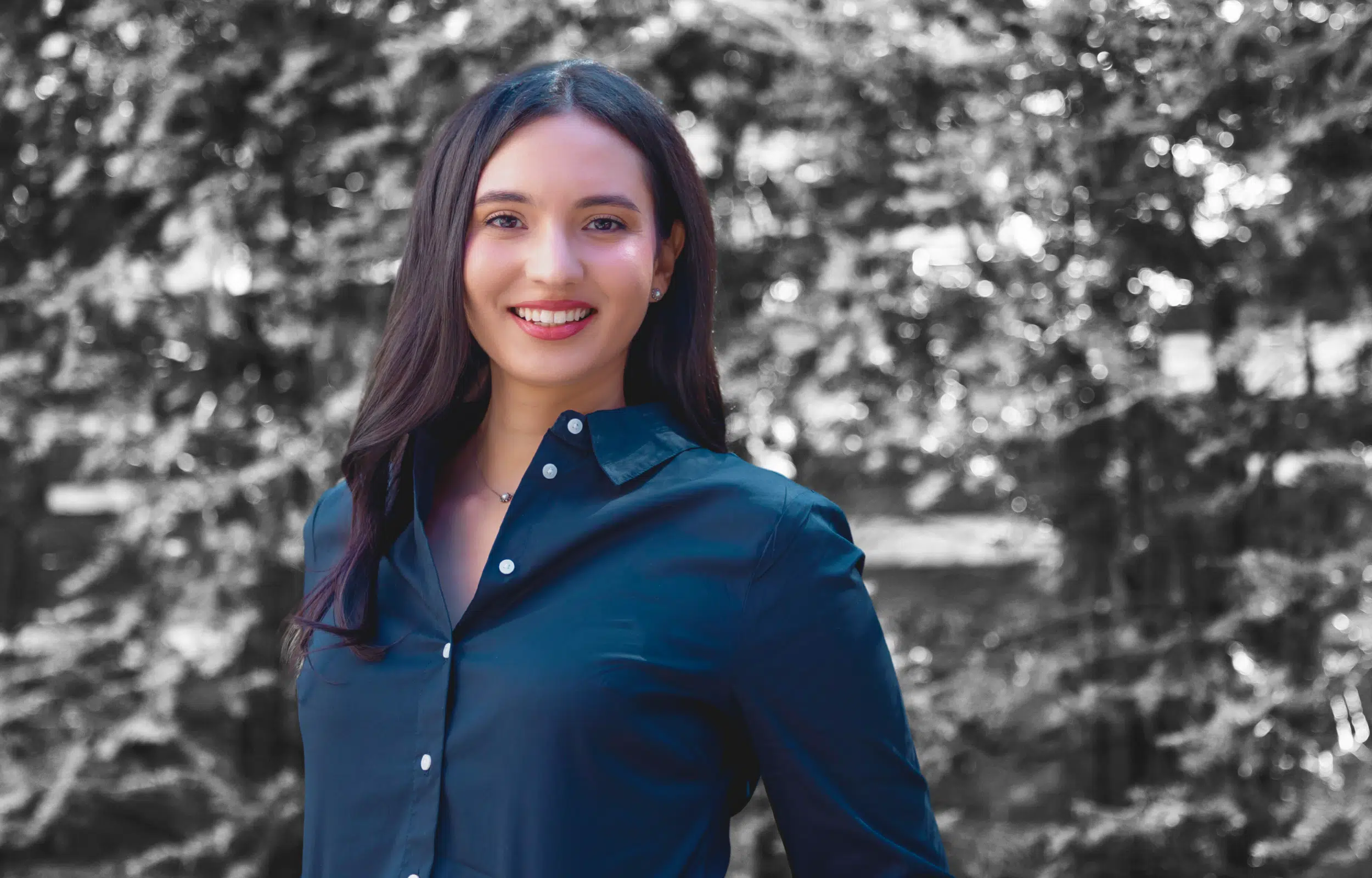
Perspectives Series – Portraits of venture capital investors: #2 Fiorella Schiffino, CFO at Raven Indigenous Capital Partners and member of the Quebec investment team.
In 2022, a Government of Canada study revealed that only 4% of venture capital funds support women-led businesses. However, investing in these businesses could add $150 billion to Canada’s GDP by 2026.
To change the game, we must collectively dismantle the prejudices faced by these female entrepreneurs and adopt practices that make venture capital investment theses more inclusive.
Our community of practice, made up of investors and experts, was created to address these issues.
We met with Fiorella Schiffino, CFO at Raven Indigenous Capital Partners.
Raven is the first venture capital fund created and managed by Indigenous people in North America. Launched in 2019 in Western Canada, it has $150 million in assets under management, with 55% invested in Canada and 45% in the United States.
We discussed the challenges faced by women entrepreneurs with Sylvain Carle, In your opinion, do Indigenous women entrepreneurs face additional difficulties?
At Raven, we are the first Indigenous-led venture capital fund in North America.

We invest exclusively in companies founded or co-led by First Nations, Métis, Inuit, or Native American people, and our impact strategy is based on the United Nations Declaration on the Rights of Indigenous Peoples.
Furthermore, in our second fund, 52% of companies are led by Indigenous women.
Over the years, we have become aware of the obstacles these women may face.
First and foremost, of course, is access to capital. For example, on reserves in Canada, residents do not have title to their land. This means that entrepreneurs cannot offer personal guarantees for a traditional loan.
As in the rest of society, but perhaps even more so among these populations, there is also a lack of knowledge and information about what venture capital really is.
Being an Indigenous woman entrepreneur also comes with additional challenges, as they face cultural and social barriers, sometimes even within their own communities.
In fact, they often have to deal with a lack of recognition and sometimes even forms of symbolic violence or isolation related to their success. Their relationship with money is part of a long history of collective trauma.
That is why we are all the more impressed by their resilience, their ability to combine economic performance with cultural roots, and their desire to create social, environmental, and community value.
What does it take, as an investor, to support women entrepreneurs?
This high proportion of women entrepreneurs in our portfolio was not a goal we set ourselves at the outset, but we believe it has developed naturally in line with the areas in which we seek to invest, such as health, consumer products, the environment, and regenerative agriculture.
It is also linked to our values and the diversity found within our teams, including our management teams. Having a female partner attracts more women entrepreneurs to knock on our door.
As investors, I would say that supporting women entrepreneurs requires us to be patient, culturally sensitive, and good listeners.
At Raven, since our inception, we have been asking ourselves: is our approach to investing truly aligned with the needs and realities of Indigenous women entrepreneurs? And we continue to listen to what women entrepreneurs share with us.
It also takes a team that understands these issues, is trained, and is able to adapt financial tools.
For example, offering equity or convertible debt, and avoiding mechanisms that put too much pressure or reproduce the power dynamics we often see between investors and entrepreneurs.
And then, you have to be flexible and committed. We do impact follow-ups, annual interviews, and create a framework in which the entrepreneur can define what success means for her and her community.
It’s really a long-term partnership, where the investor isn’t just there to evaluate, but to build with the entrepreneur.
What is the benefit for you in participating in the community of practice with other investors?
For us at Raven, joining the community of practice was first and foremost a valuable opportunity to forge ties in Quebec, a market that is still new to our fund.
We needed to better understand the local ecosystem and meet other players—founders, investors, partners—who share similar values, particularly in terms of equity, diversity, and social impact.
The community allowed us to create meaningful human and professional connections.
Beyond networking, what is truly valuable are the shared reflections. For example, discussions about definitions:
What constitutes a woman-led company?
Is it a co-founder? An operational leader? A majority shareholder?
These discussions help us clarify our own criteria, but also better understand those of others, in order to strive for greater consistency and transparency in the sector.

And then there is the introspective aspect. We participated in a workshop on unconscious bias that sparked some very good conversations.
Even for an organization like ours, which is committed to diversity, it is essential to remain vigilant, to continue learning, and to question ourselves. The community of practice provides us with a space for that: a place for mutual learning, without complacency, but with kindness.

What advice would you give to a female entrepreneur looking to secure funding?
For any female entrepreneur, I would recommend looking for an investor who shares her vision and values.
Venture capital can be a powerful lever, but it must be part of a respectful partnership. And above all: don't get discouraged. There will be rejections, but that doesn't mean the project isn't worthwhile. It's primarily a question of alignment.
And of course, at Raven, we’re always open to discovering new businesses led by innovative, ambitious Indigenous women who are rooted in their culture.
We’re currently working on our first projects in Quebec and hope to see some great achievements come to fruition.